


"If you have the opportunity to help, how could you not do it?"
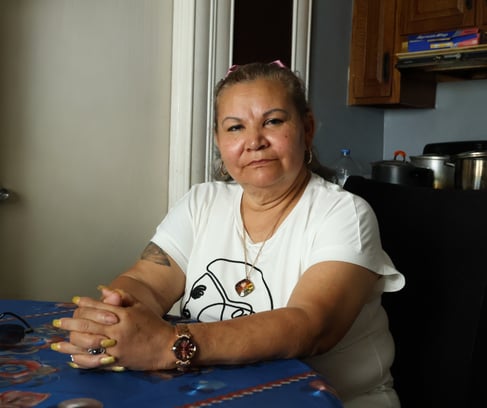 Community organizing is the backbone of collective change. Behind every door knocked is a human being with their own unique experience. For Isabel Ordóñez, a canvasser with The Connecticut Project, this work comes from a deep motivation: no one should have to face life’s challenges completely alone. Originally from Honduras and now a New Britain, Connecticut resident for four years, Isabel found in The Connecticut Project an opportunity to continue the same kind of community work she had done for years in her home country: listening to people, identifying problems, and helping find solutions. I recently sat down with Isabel to talk to her about why she does this work.
Brianna: ¿Cuál fue tu primera experiencia haciendo algo con tu comunidad? What was your first experience doing something with your community?
Isabel: Lo primero en mi comunidad, pues empecé como presidenta del patronato. Es una organización en la comunidad para los servicios de la comunidad. Entonces me eligieron como presidenta del patronato, yo decía: “Va a ser bien difícil, ¿verdad?” pero teniendo el apoyo de la comunidad y mirando tu trabajo, tú puedes ir implementando todo lo que necesitas. The first thing in my community, well, I started as the President of the patronage. It's an organization in the community for community services. So, they elected me as the President of the patronage, and I was like, “This is going to be really hard, right?” but by having the support of the community and seeing your work, you can start implementing everything you need.
Community organizing works like a chain reaction: one person helps another, who then helps someone else, and the impact continues to grow.
As a nurse in Honduras, Isabel became known for helping neighbors even when they couldn't afford medical care. From securing medication and organizing vaccination drives, her commitment to supporting others is what led her community to place their trust in her.
Brianna: ¿Puede contarme cómo conociste The Connecticut Project y qué te motivó a incluirte en este proyecto? Can you tell me how you first met The Connecticut Project, and what motivated you to get involved?
Isabel: Quien fue a tocar mi puerta fue Brigith. Ella sola andaba tocando puertas y llegó no solo una vez a la casa, sino que tocaba y ya cuando yo la miraba decía, perdonando la palabra, “qué molesta esta muchacha.” The one who came to knock on my door was Brigith. She used to go around knocking on doors by herself and she didn't just come to the house once; she would knock and when I looked at her, I would say, pardon the expression, "this girl is so annoying."
During that period, Isabel was facing a housing crisis after her wages were withheld for several months, which led to her receiving an eviction notice. The uncertainty, stress, and possibility of losing her home left her feeling hopeless.
Isabel: La tercera vez que Brigith llegó a tocar la casa, ella me dijo, “te invito, vamos [con] manos unidas.” Me estaba diciendo ella que fuera a la reunión [del capítulo comunitario]. Y cuando fui a la reunión y miró a ese montón de gente que estaban ahí, digo yo, “ay, solo hablar—solo hablar y hablar.” Pero se refirieron a lo que es la renta. Y entonces había otra persona que estaba contando el testimonio que estaba pasando peor que mí. Y entonces a mí me dieron la oportunidad de decirme por qué yo había ido y qué era el problema que yo estaba pasando. The third time Brigith came to knock on the door, she told me, “I invite you, let’s go [hand in hand].” She was telling me to go to the [community chapter] meeting. And when I went to the meeting and looked at that crowd of people who were there, I thought, “oh, it’s just to talk—just talking and talking.” But they were talking about rent. And then there was another person sharing their story who was going through it worse than me. And then I was given the chance to talk about why I had gone and what problem I was going through.
That community chapter meeting was a turning point and would become a source of support, community, and ultimately an opportunity to join The Connecticut Project as a canvasser.
Isabel: Entonces ahí, Brianna, yo pude desahogarme, verdad, contando mi problema. Y entonces encontré muchas personas que me dieron un abrazo y que me dijeron, “todo va a estar bien.” So there, Brianna, I was able to vent, you know, by talking about my problem. And then I found myself around people who gave me a hug and told me, “everything is going to be okay.”
Hope was brought up many times throughout our interview. The idea that one single conversation can have so much impact. As the first canvasser for The Connecticut Project, Isabel has been able to watch the team grow from a handful of folks to a field team with a presence across Connecticut. In her role as a canvasser, and with her genuine spirit, Isabel has continued to give hope to her community.
She shared with me an interaction she had at the doors, where she met a family that had lost their HUSKY and SNAP, and was close to losing their housing. While she explained that The Connecticut Project couldn't directly solve their issue, she was able to connect them to resources and invite them out to the Capitol with us to share with legislators the importance of protecting people from losing their food and healthcare. She even went as far as to buy groceries for the family the very next day.
Despite the challenges, Isabel never stopped believing in the potential of the work that The Connecticut Project has been building together with working class people. This is people power, collective action, and to Isabel:
“¿Qué es lo que le damos nosotros?
Una esperanza con lo que nosotros hacemos.”
“What is it that we give?
Hope with what we do.”
Isabel’s story is a reminder that community organizing begins with something simple: listening. Working class people are at the heart of what we do. Behind every door is a person with a story. And behind every conversation is the opportunity to build a stronger Connecticut.
I asked Isabel about the impact she hopes to make in the future.
Isabel: Quiero llegar más alto. Saber mis logros. Y yo, como quisiera llevar esto, lo que he aprendido, yo lo voy a llevar allá [a Honduras]. Si algún día logro estar allá en mi país. I want to reach higher. To know my achievements. And I, how I wish to carry this, what I have learned, I will take it there [to Honduras]. If one day I get to be there in my country.
For Isabel, canvassing is so much more than knocking on doors. It's a way of showing people that they do not have to face their challenges alone.
Join your local Community Action Team to improve your community! Whether you have a story similar to Isabel’s, are struggling with the cost of living, or are looking for a way to be a better neighbor, you can join The Connecticut Project and make it known that opportunity means you, too.